The best loyalty program for a small business is the one that changes customer behavior — more visits, higher spend per visit, fewer defections — without quietly eroding your margin. That standard, laid out by Ross Chanowski in NuMarket's 2026 guide to small business loyalty programs, is a better yardstick than feature counts or enrollment numbers. Here is how the four most common models compare on setup, cost, and the kind of customer behavior each one is built to drive.
Understanding Loyalty Programs for Small Businesses
Loyalty programs have become a standard growth tool for consumer-facing small businesses — retail shops, restaurants, and salons — because retaining an existing customer is cheaper than acquiring a new one. Zoho's small business guide frames the core promise plainly: a well-designed program helps you retain existing customers, reduce acquisition costs, and build lasting relationships. The mechanics you choose determine which of those outcomes you actually get.
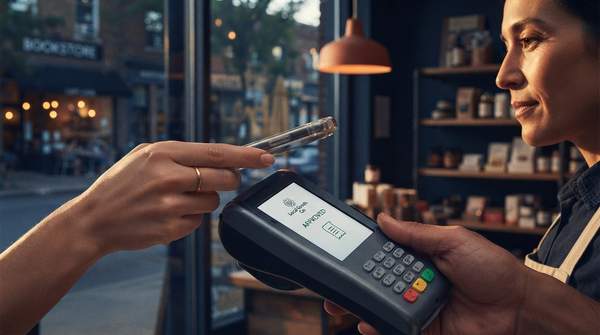
What has changed is the delivery. Paper punch cards and plastic stamps have largely given way to digital passes, phone-number-based check-ins, and wallet integrations that notify customers automatically when they earn or redeem a reward. Square's loyalty software documentation, for example, describes transactional text notifications sent when points are earned, digital passes customers can add to Apple Wallet, and bonus-point promotions to bring lapsed customers back. The strategic question for an owner is no longer whether to digitize, but which reward structure fits how customers actually buy from you.
Points-Based Loyalty Programs
Points programs are the most common model: customers earn points on every purchase and trade them later for discounts, freebies, or special offers. Because points accumulate across purchases of any size, the model suits businesses with varied product offerings or transaction values — a customer buying a coffee today and a gift basket next week is rewarded for both.
Engagement comes from the perceived value and attainability of the rewards, and the model appeals to a broad base because everyone earns something. The operational burden sits in redemption economics: points are a deferred discount, so the reward structure needs careful management to stay profitable. Platform features like automatic notifications and in-store or online redemption — which Square describes as simple for both customers and staff — reduce the day-to-day workload once the program is running.
Tiered Loyalty Programs
Tiered programs rank customers by how much they spend, with higher ranks unlocking greater rewards and perks. LoyaltyPoint's guide to program types describes the mechanics in detail: tiers can be defined by total spend, purchase frequency, accumulated points, or hybrid scoring, and each tier unlocks distinct benefits such as higher discounts, exclusive access to products or events, or service-level differentiation like priority support.
Many systems use time-based qualification, such as annual resets, which creates a behavioral loop of progress, achievement, and maintenance pressure — customers must keep spending to keep their status. That is the model's chief strength: it fosters aspiration and exclusivity, motivating customers to reach higher levels. The trade-off is complexity. Defining clear tiers, advancement rules, and differentiated rewards at each level takes real strategic planning, even when software simplifies administration. Costs also scale with the structure: richer perks at higher tiers mean higher reward outlays, and subscription fees typically rise with features and customer base.
Digital Punch Card Programs
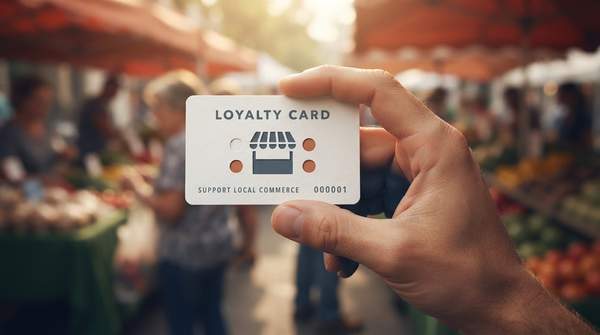
The digital punch card is the simplest model in the set: a set number of visits or purchases earns a free item, tracked on a phone instead of a paper card. Clavaa's 2025 review of loyalty providers profiles Loyalzoo's digital punch card as a "simple & effective" solution — a phone-number-based digital card with setup measured in minutes, no contract, and a listed monthly cost of $47, plus $30 for SMS.
That simplicity is the point for small businesses. As NuMarket's guide puts it, punch cards suit simple frequency goals — the coffee shop that wants a tenth latte to be free. The model is easy for staff to operate and easy for customers to understand, which drives participation. Its limitation is the mirror image: a punch card rewards visits, not spend, so it does little to lift the average transaction value on its own.
Hybrid Loyalty Programs
Hybrid programs combine multiple mechanics — points plus tiers, spend plus engagement — inside one system. LoyaltyPoint's guide credits the approach with flexibility across customer segments, higher overall performance potential because transactional, emotional, and behavioral drivers work together, better lifecycle coverage from acquisition through retention, and stronger personalization from richer data.
The same source is candid about the costs of that ambition: high operational complexity, a need for advanced data infrastructure, risk of a fragmented customer experience without clear logic, higher implementation and maintenance costs, and potential user confusion if the frontend isn't simplified. Nike Membership is cited as a strong example — an integrated digital ecosystem rather than a single mechanic. For a small business, a modest hybrid (points with a VIP tier, for instance) can capture some of the benefit without the enterprise-scale infrastructure.
Loyalty Program Model Comparison for Small Businesses
The table below maps each model to the decision factors that matter most: which business it fits, how hard it is to set up, what it costs to run, and how it engages customers. Use it to shortlist the model that matches your transaction pattern, customer base, and budget — then pressure-test that choice against the goal-alignment questions in the next section.
| Program Model | Best For | Setup Complexity | Ongoing Cost | Customer Engagement Style |
|---|---|---|---|---|
| Points-Based | Businesses with varied product offerings or transaction values; customers accumulate points over time for flexible rewards | Not established in the evidence reviewed for this comparison | Typically subscription-based, varying with customer count, order volume, or features; reward redemption needs careful margin management | Encourages repeat purchases through tangible rewards for accumulated spending; driven by perceived value and attainability of rewards |
| Tiered | Businesses aiming to reward high-value customers and encourage increased spending to unlock exclusive benefits | Moderate to high — requires defining tiers, advancement rules, and differentiated rewards; platforms simplify administration but strategic planning is essential | Subscription fees often scale with features and customer base; richer rewards at higher tiers increase reward costs | Fosters aspiration and exclusivity; customers pursue status and premium perks, often maintained through annual resets |
| Digital Punch Card | Simple frequency businesses — cafés, salons, services — where a set number of visits earns a reward | Low — one profiled solution sets up in minutes with no contract | One profiled provider lists $47/month, plus $30 for SMS; pricing varies by provider | Simple, universally understood visit-tracking that rewards frequency but not spend per visit |
| Hybrid | Businesses with diverse customer segments and multiple goals (acquisition, retention, engagement) to serve in one system | High — multiple systems must work together consistently and depend on data quality | Higher implementation and maintenance costs; more moving parts require more resources | Combines transactional, emotional, and behavioral drivers; strong personalization potential if the frontend stays simple |
Read the table against your own constraints. A single-location café with uniform transactions can start with a punch card and a predictable monthly fee. A boutique with wide price ranges and a mix of casual and devoted customers gets more from points or a points-plus-tier hybrid — provided the reward economics and data handling are in place.
Aligning Your Program with Business Goals
The model should follow the behavior you want to change. NuMarket's framework grades every program on three outcomes: getting customers to visit more often, lifting how much they spend per visit, and keeping them from drifting to a competitor. Match the mechanic to the target.
- Increase visit frequency: punch cards suit simple frequency goals; bonus-point promotions and limited-time offers can pull lapsed customers back.
- Increase average transaction value: points on every purchase reward larger baskets, and tiers reward cumulative spending — with annual resets pressuring customers to maintain their status.
- Reward and grow your best customers: VIP tiers let frequent visitors earn rewards faster, as Square's tier customization describes, while exclusive access and service perks deepen the relationship.
- Drive referrals: National Retail Solutions' Marko Georgiev argues referrals are a highly cost-effective form of lead generation and a signal of hyper-committed customers — some platforms bundle referral management alongside points and tiers.
One caution from NuMarket's guide: judge the program by repeat visits, not enrollment counts. A slick app that doesn't change behavior is a cost, not a program.
Cost Implications and Implementation Considerations
Most loyalty platforms charge a monthly or annual subscription that varies with customer count, order volume, or the features you need, according to Ben Salomon's cost-calculation guide for Yotpo — a predictable operational expense, though some providers add one-time setup, data migration, or onboarding fees, more commonly at the enterprise level. Pricing is often tiered, so costs grow as your program does.
The reward side of the ledger matters as much as the software fee. Yotpo's worked ROI example illustrates the math: a program costing $33,000 across 4,000 members, with a 60% gross margin, succeeds when members' average order value rises from $100 to $125 and purchase frequency climbs from 2 to 3.5 purchases per year. The lesson for a small business is to model reward liability against margin before launch, not after.
Choosing the Right Loyalty Program for Your Small Business
Select a loyalty program model that directly aligns with your primary business goal — increasing visit frequency, average transaction value, or customer retention — and fits your operational capacity and budget. A punch card wins on simplicity for frequency-driven businesses; points handle varied spending; tiers and hybrids reward your best customers but demand more planning, data, and cost. Software choice is secondary to the behavioral goal: the program earns its keep only if it changes how customers buy.
Then hold it accountable. Monitor customer repeat purchase rate, average transaction value, or customer retention. If those numbers don't move within your review period, adjust the reward structure or the model itself — the right program is the one the metrics prove, not the one with the longest feature list.
Sources
- The Best Loyalty Programs for Small Businesses in 2026 — NuMarket | Customer Capital for Small Biz
- Customer Loyalty Programs for Small Business - Zoho Thrive
- Customer Loyalty Program Software — Square
- Types of Loyalty Programs: Complete Guide (+ Examples & Best Use Cases) — Loyaltypoint
- 7 Best Loyalty Program Providers in 2025 — CLAVAA
- 9 Best Loyalty Programs & Why Your Small Business Needs One — National Retail Solutions
- Loyalty Program Cost Calculation: A Guide To ROI — Yotpo