If your downtown has empty windows, you really have two strategic options worth pursuing: put art in them, or put temporary businesses in them. I've looked at how cities from Seattle to Chicago to Cincinnati approach this, and the choice between window art installations and pop-up retail isn't cosmetic—it determines who your partners are, what funding you tap, and whether you're chasing aesthetic revitalization or commercial incubation. Here's my breakdown of both models, and how to pick the one that fits your corridor.
Understanding Vacant Storefront Activation Models
Storefront activation is exactly what it sounds like: taking a space that sits empty and giving it a temporary, productive use until a permanent tenant arrives. The idea has spread widely because it addresses a problem that compounds itself—an empty block feels unsafe and unloved, which makes it harder to lease, which creates more emptiness.
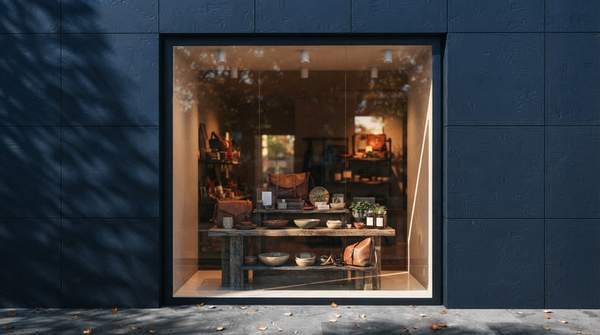
The two dominant models differ in their core logic. One treats the vacant window as a canvas, using art to signal that a street is alive and cared for. The other treats the vacant space as a testing ground, using short-term retail to seed actual businesses. Municipal programs increasingly blend both. Chicago's Department of Planning and Development, for instance, describes funding mixes that can include "a cluster of art displays and artistic signage promoting local businesses in the windows of multiple vacant storefronts" when a corridor's vacant properties are in poorer condition—a pragmatic acknowledgment that some spaces can't host retail activity yet but can still contribute visually.
What unites every program I reviewed is the goal of converting vacancy, however temporarily, into activity that makes a corridor more attractive to permanent investment. What separates them is which kind of activity they prioritize.
Window/Art Installations: Aesthetic and Community Engagement
The art model is the lighter-touch of the two, and I'd argue it's the right starting point for corridors where buildings aren't lease-ready or where the immediate problem is visual blight. The pattern is remarkably consistent across the programs I examined: a local arts organization partners with a downtown or business association to place juried, temporary exhibits in vacant windows.
Bellingham, Washington offers a clean template. Allied Arts of Whatcom County partners with the Downtown Bellingham Partnership to create juried temporary art exhibits and installations in vacant building windows along Cornwall Avenue. Chehalis, Washington runs something similar: the Chehalis Community Renaissance Team coordinates with ARTrails of Southwest Washington to place short and long-term art exhibits in empty storefronts throughout the area.
What makes this model work is its low barrier to entry for property owners and its built-in community engagement. Artists get visibility and, in some programs, direct compensation—Santa Barbara's Vacant Window Beautification Program, run by the Downtown Santa Barbara Improvement Association, transforms vacant State Street storefronts into displays of local artwork, with selected artists receiving a $250 honorarium and credit on installations. The typical implementers here are artists, arts organizations, and community groups, often with city funding or subsidies behind them. Seattle Restored, which receives some funding from the City of Seattle, collaborates with property owners and local artists to install temporary window art displays in empty storefronts.
The trade-off is honest: art fills windows, not leases. It improves how a street feels and builds relationships with the creative community, but it doesn't directly test whether a business can survive in that space.
Pop-Up Retail and Events: Commercial Incubation and Economic Growth
The pop-up model is more ambitious and more commercially focused. Its primary goals are to reduce commercial vacancies, catalyze small business growth, and improve economic sustainability—these are economic development objectives, not aesthetic ones. The typical partners shift accordingly: small business owners, local entrepreneurs, and nonprofit community organizations, often supported by program grants.
The strongest example I found comes from Cincinnati, where the 3CDC Main Street Pop-Up Program specifically targets small business owners for temporary retail operations, offering three-month leases with renovation support. That renovation component matters—it lowers the capital barrier that keeps entrepreneurs out of vacant spaces and simultaneously improves the physical stock for whoever comes next.
Seattle Restored shows how the two models can merge into a single program. It matches local small businesses and artists with vacant downtown storefronts, providing $2,500 in working capital and support for pop-up shops, artist residencies, and window art installations. San Francisco's Vacant to Vibrant program takes a similar paired approach, transforming vacant storefronts into community spaces through art installations and pop-ups while pairing property owners with artists and small businesses for short-term activations.
Pop-ups can also take the form of events rather than shops. From October through December 2022, the Wenatchee Downtown Association organized a temporary pop-up holiday market in a vacant first-floor commercial space downtown—a seasonal format that requires commitment for only a few months. The trade-off here is the mirror image of the art model: pop-ups demand more from property owners in terms of agreements, insurance, and build-out, but they generate actual commerce and give entrepreneurs a low-risk proof of concept.
Comparative Framework: Storefront Activation Models
Here's the comparison that should drive your decision. I've organized the two models across the dimensions that actually differ in practice—primary goal, typical partners, and implementation focus—drawing on the program examples above. Read the table as a matching exercise: which row describes the partners you can realistically assemble and the outcome your corridor needs most?
| Dimension | Window/Art Installations | Pop-Up Retail/Events |
|---|---|---|
| Primary Goal | Aesthetic improvement and community engagement—making vacant corridors feel active and cared for | Reduce commercial vacancies, catalyze small business growth, and improve economic sustainability |
| Typical Implementers/Partners | Artists, arts organizations, or community groups, often with city funding or support | Small business owners, local entrepreneurs, and nonprofit community organizations, often with program grants |
| Implementation Focus | Temporary exhibits and displays in vacant windows; lighter demands on the space itself | Short-term leases and temporary retail operations; programs often provide renovation assistance and working capital |
| Example Programs | Bellingham's Creative Spaces (Allied Arts of Whatcom County with Downtown Bellingham Partnership); Chehalis Storefront Art Project; Santa Barbara's Vacant Window Beautification Program | Cincinnati 3CDC Main Street Pop-Up Program (three-month leases with renovation support); Wenatchee pop-up holiday market; Seattle Restored (blended model) |
The strategic trade-off the table reveals is this: art installations optimize for how a corridor looks and feels, while pop-ups optimize for whether commerce can actually take root. A corridor with willing property owners and available entrepreneurs should lean commercial; a corridor with deteriorating spaces and a strong arts community should start with windows. And as Seattle Restored demonstrates, the choice isn't permanent—blended programs exist precisely because the two goals reinforce each other.
Key Initial Steps for Launching an Activation Program
Whichever model you choose, the first phase is the same, and it's the phase that determines everything else: securing space through property owner partnerships. Chicago's Commercial Corridor Storefront Activation Program, administered by the Department of Planning and Development, lays out the sequence clearly, and I'd treat it as a universal playbook.
First, survey your target corridor and identify a range of vacant storefronts—not a single space, because you'll need options with different owners, conditions, and sizes. Second, identify the people who will activate them: existing small businesses, entrepreneurs, or artists who could receive support. Third, communicate directly with building owners. Chicago's program design puts the selected organization in the role of conduit—gathering data and acting as the connector between entrepreneurs and appropriate commercial spaces along the corridor.
Finally, formalize the relationship. A short-term use agreement is what converts a sympathetic conversation into an actual activation, and it protects both sides: the owner knows the duration and conditions, and the activator knows the space is committed. Chicago's model also connects businesses and property owners with the city department managing each grant project, which points to a broader lesson—municipal involvement, whether through funding or coordination, is a common thread in nearly every successful program I reviewed. Notably, Chicago's program focuses its investment on building and sustaining local wealth in commercial corridors in low-to-moderate-income communities, so check whether your municipality offers similar targeted support.
Selecting Your Storefront Activation Strategy
Property owners and community planners should select a storefront activation strategy—art installation or pop-up retail—based on their primary revitalization goals, whether aesthetic improvement, community engagement, or commercial incubation, and then proactively engage property owners with clear short-term agreements. That's the decision in one sentence, and the comparison table above is the tool for making it.
One honest caveat: these programs are widely credited with making corridors more attractive to permanent tenants, but I found no quantitative data on conversion rates from temporary activation to permanent lease, so don't promise your stakeholders a number the evidence can't support. Similarly, setup costs vary too much by space and program for any reliable figure here—though the examples show that subsidies, honorariums, and working-capital grants are common ways programs reduce them.
The measurable indicator of success is concrete: the establishment of formal partnerships with property owners and the successful launch of temporary activations in previously vacant spaces. Start there. If, six months in, your corridor has signed agreements and occupied windows—whether with juried art or a three-month pop-up—you have a program. Everything after that is scaling it.