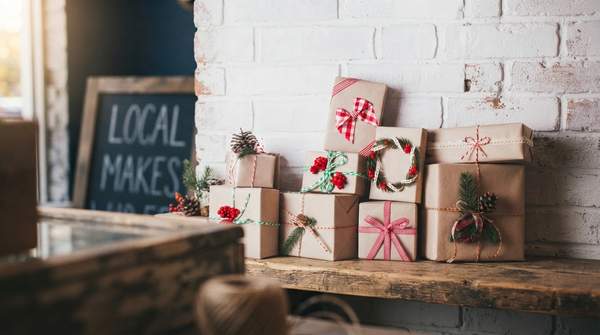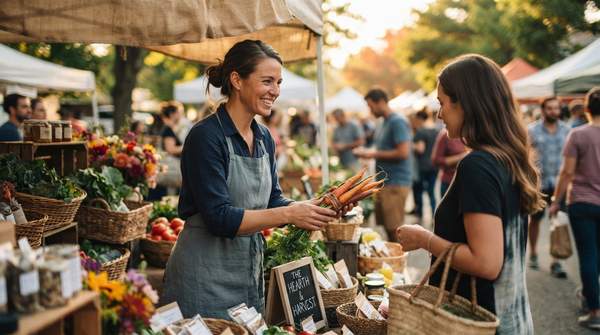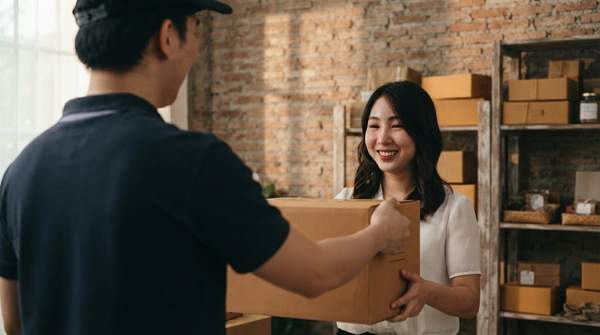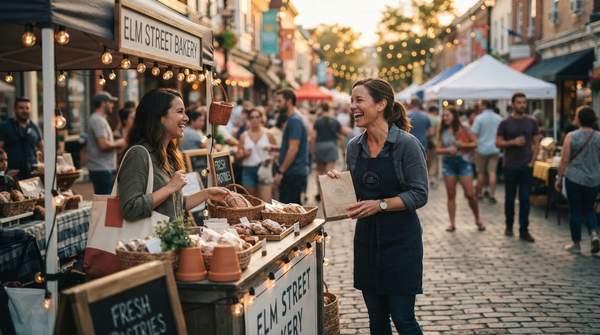
A community festival, fair, or market can do more for your small business than a weekend of sales. Done well, it builds brand visibility, generates leads, and keeps your name in local minds long after the booths come down. The key is treating the event as a three-phase project: prepare before, engage during, and follow up after. Guidance from local business development organizations points to the same set of levers in each phase, and one often-cited figure suggests the stakes are real: the Fire for Effect Foundation reports that a National Endowment for the Arts study found community events can increase local business revenue by up to 30%.
Maximizing Your Presence: The Three Phases of Event Participation
Most businesses show up to an event, sell what they can, and go home. That leaves most of the value on the table. Writing for the Wisconsin Economic Development Corporation, Alexa Hackfort describes downtown events as a chance to connect with the community, boost visibility, and cultivate brand loyalty — but only if a business works multiple angles at once: sponsorship, vending, partnerships, promotions, media, social hashtags, and customer data collection.
The Flower Mound Chamber of Commerce adds a psychological reason this works. The more often people see your business actively involved in the community, the more likely your brand sticks in their minds when they need your services. Repetition builds familiarity, and familiarity builds trust over time.
That is why a scattered, one-off approach underperforms. A business that prepares deliberately, engages fully on-site, and follows up systematically converts a single afternoon into months of marketing material and new relationships.
Phase 1: Pre-Event Preparation – Laying the Groundwork for Success
Preparation is where you choose your role and multiply your reach. Sponsoring a community event — a sports team, a charity run, or a local fair — puts your logo on banners, branded booths, and promotional items, according to the Flower Mound Chamber. That visibility is the slow-burn asset: each appearance compounds the last one.
But you do not have to go alone. The same chamber recommends collaborating with other local businesses on a co-marketing campaign or joint events, and Congdon Yards, a North Carolina business campus, notes that partnerships bring multiple companies under one roof, growing your customer base and professional network at the same time.
Pre-event is also the time to line up practical logistics that Hackfort highlights: scheduling interviews with local media outlets, planning event-specific promotions or discounts, and deciding how you will use social media and event hashtags. If you plan to film attendees or interview customers — especially children — permission must come first, as North Penn Now contributor Chris Bates advises businesses.
Phase 2: On-Site Engagement – Connecting with Your Community
On event day, direct participation is your core move. Hackfort's list of tactics includes participating as a vendor, hosting pop-up events, running sidewalk sales, or setting up pop-up markets. Pop-ups deserve special attention: Congdon Yards describes them as limited-time promotional events that are increasingly popular and can even offer a chance to go viral, letting you spotlight your most popular seasonal items while telling visitors how to find your regular storefront.
Your booth should do two jobs at once: sell and capture. Offer event-specific promotions to reward attendees, and collect customer data for follow-up — an email address gathered today is a marketing channel you keep after the event ends.
The second job is content capture. Bates suggests recording with short-form content in mind. Rather than one long recap, look for sub-stories: a baker at a festival, for example, could produce a video about preparations before opening, another about the day's best-selling item, and a third about customer feedback. Those clips feed your marketing for weeks.
Phase 3: Post-Event Follow-up – Sustaining Momentum and Measuring Impact
The follow-up phase is where most businesses quit, and where the real return lives. Bates lays out a rhythm that stretches one event into a cycle of content: one week after the event, post an interaction with a client who attended; a week later, post an employee interview about the event; later still, share any money raised for charity and thank the organizing organization. This keeps your feed alive without constant new shooting.
Footage can also be reused the following year. Bates notes that saving clips lets a company promote its participation when it returns to the same festival, fundraiser, or celebration — telling people what it is like before they visit the booth.
Alongside content, work the relationships. Follow up with the leads you collected, engage with new connections on social media, and consistently share high-quality material. Bates frames the payoff plainly: this steady sharing attracts new customers and reinforces relationships with existing ones, building brand presence over time.
Your Three-Phase Community Event Checklist
Use this table as a reusable plan for any festival, fair, or market you join. It arranges the tactics above into a chronological sequence, so nothing falls through between signing up and the follow-up email.
| Phase | Action Item | Purpose / Benefit | Key Consideration |
|---|---|---|---|
| Pre-Event | Sponsor the event | Increases brand visibility and reinforces community commitment | Visibility builds familiarity and trust over time; banners, booths, and promo items get your logo seen |
| Pre-Event | Partner with other local businesses | Amplifies reach and creates shared experiences | Includes co-marketing campaigns, joint pop-ups, or shared market spaces |
| Pre-Event | Line up media and promotions | Extends reach beyond the event itself | Schedule local media interviews, plan event-specific discounts, and prepare social posts with event hashtags |
| On-Site | Participate as a vendor or host a pop-up | Enables direct customer interaction and on-the-spot sales | Can include sidewalk sales or pop-up markets; get permission before filming or interviewing attendees, especially children |
| On-Site | Capture content and customer data | Creates marketing material and follow-up channels | Record short-form sub-stories; collect contact details for follow-up |
| Post-Event | Leverage captured content | Extends the event's marketing life across social media, your website, and email | Space posts over weeks; reuse footage when you return to the same event next year |
| Post-Event | Follow up with leads and new connections | Maintains momentum and builds brand presence | Consistent, high-quality content sharing is key to sustained engagement |
Two boundaries are worth stating honestly. This framework covers participating in existing community events, not organizing your own from scratch. And while the NEA finding reported by the Fire for Effect Foundation — up to a 30% revenue increase — sets an encouraging benchmark, your specific return will vary by event, industry, and execution.
Collaborating for Greater Reach: Partnering with Local Entities
Collaboration is the highest-leverage tactic across all three phases, because it shares costs and audiences. Co-marketing campaigns let two businesses cross-promote to each other's customers. Joint pop-ups combine foot traffic that neither business would draw alone.
The most ambitious version turns your space into a shared market. Square's small-business publication describes how Hi-Lo Liquor made curated markets central to its brand, featuring local makers, food vendors, and producers. The store attracted new foot traffic, supported other local brands, and became known as a connector in its neighborhood — a specialty shop transformed into a destination for discovery.
Congdon Yards frames the broader logic: hosting or joining a partnership event brings multiple companies under one roof, growing your customer base and professional network simultaneously. For a small business with a limited budget, that multiplication is the point.
Sustaining Engagement: Your Next Steps
Implement a structured, three-phase approach for all future community event participation to maximize brand visibility and customer engagement. Pick your next local festival or market, assign each checklist row a date and an owner, and treat the post-event weeks as part of the plan rather than an afterthought. Your measurable indicator of success: increased social media engagement, direct inquiries, and repeat customer visits following event participation. Track those three numbers after your next event, compare them to a normal month, and you will have concrete evidence of whether the three-phase framework is working for your business — and which phase to strengthen next time.
Sources
- Fire for Effect: Empowering Communities Through Events — Fire For Effect Foundation Inc
- Top 10 ways for small businesses to engage with downtown events — WEDC
- The Power of Community Engagement — Flower Mound Chamber of Commerce
- How To Engage The Community Through Local Events — Congdon Yards
- How Local Businesses Can Turn Community Events Into Engaging Video Content — North Penn Now
- Squareup