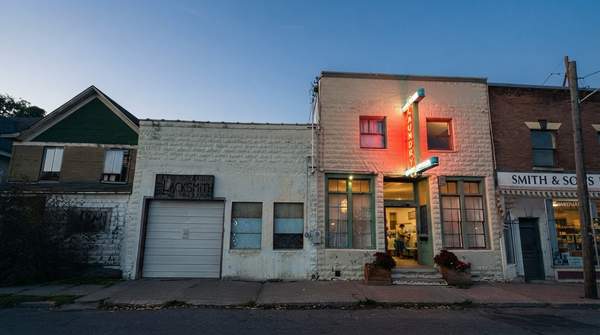
Small business owners renovating a storefront in a historic preservation district should expect two things: design guidelines that govern visible elements such as signs, windows, doors, and awnings, and a review process before a local historic preservation board that culminates in a Certificate of Appropriateness (COA). Municipal codes across the country converge on the same underlying principle — preserve the historic character of the storefront while allowing compatible changes — even though the specific rules and the commission's name vary from city to city.
Understanding Historic Preservation Guidelines for Storefronts
Historic district guidelines exist to protect the commercial character that makes a district distinctive, and they typically focus on the ground-level facade, the part of the building that greets customers. Northville, Michigan's commercial design standards describe the storefront's purpose plainly: to display merchant wares and provide a welcoming entry to the customer. Original storefronts were designed with simplicity in mind, the standards note, so that busy design elements would not detract from merchandise, with simple materials like wood and glass harmonizing with the upper portion of the building.
Many local codes trace their reasoning to the Secretary of the Interior's Standards for Rehabilitating Historic Buildings, which Torrington, Connecticut's downtown design review guidelines describe as providing good guidance in the proper restoration and renovation of historic buildings. This connection is a guiding principle rather than a direct legal mandate for every local rule, but it explains why so many municipal documents read alike: they share a national framework that emphasizes retaining historic fabric and avoiding incompatible additions.
One practical implication for business owners is that a renovation may involve subtraction before addition. Torrington's guidelines observe that later storefronts often hide rather than remove original elements and details, so by carefully removing select non-historic materials, the historic character may be revealed. Historic elements revealed during this process should be retained and incorporated into restored storefronts. The city's guidelines also recommend maintaining the commercial character of existing storefronts and avoiding added elements that appear residential in character.